Searches for “67,” “what is 67,” and “6-7 trend” have surged in recent days after multiple major news outlets reported that In-N-Out Burger removed the order number “67” from its system following a viral meme. Here’s what’s actually confirmed, what’s still unclear, and why this is trending right now.
What’s Actually Confirmed (Reality Check)
Here’s what is officially confirmed so far:
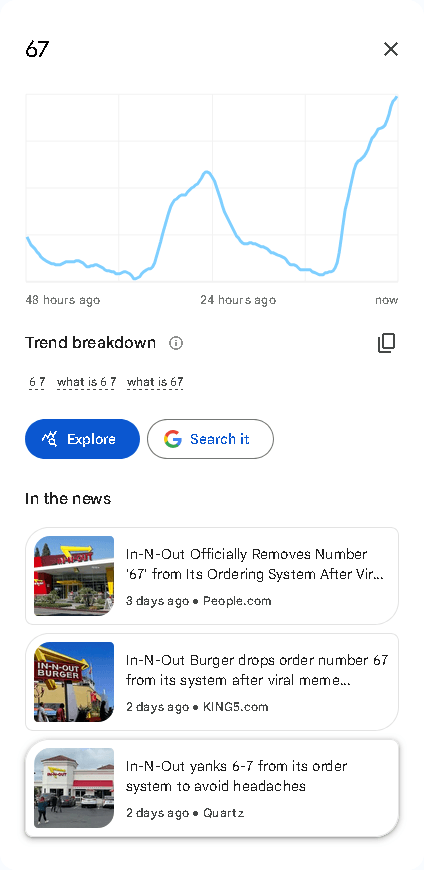
- In-N-Out Burger has removed the order number “67” from its internal ordering system at many locations, skipping directly from 66 to 68.
- The change followed repeated in-store disruptions caused by customers reacting loudly when order number 67 was called.
- The behavior was tied to a viral internet meme known as “6-7”, which spread across TikTok, X, and Reddit.
Factual context:
Search interest for “67” rose sharply over a 48-hour window, coinciding with national media coverage from outlets including People.com, Quartz, and local Fox affiliates.
What’s Still Unknown
- Whether all In-N-Out locations nationwide have permanently removed the number.
- How long the change will remain in place.
- Whether other businesses will adopt similar measures.
If you’re seeing posts claiming “67 banned nationwide” or “67 permanently canceled,” those claims are still speculative at this stage.
Why This Is Trending Right Now
Several forces are driving the sudden spike in interest:
1. Primary Trigger
News reports confirmed that In-N-Out altered its ordering system in response to real-world disruptions caused by a viral meme.
2. Market or Cultural Pressure
The “6-7” meme thrives on absurdity and group participation, especially among teens. Its lack of a fixed meaning makes it easy to replicate in public spaces.
3. Algorithmic Amplification
Short-form video platforms amplified the behavior:
- TikTok clips of customers reacting to “67”
- X posts discussing the restaurant’s response
- News articles embedded into social feeds
This follows a familiar pattern:
Viral behavior → real-world response → curiosity → search spike
What This Means If You’re Affected
The Upside
- Faster service and fewer disruptions at affected restaurants.
- Clear example of how businesses respond to viral behavior.
- Useful case study for trend-driven operational changes.
In short: a small operational fix with outsized cultural visibility.
The Tradeoffs
- Confusion for customers unfamiliar with the meme.
- Reinforces how quickly online trends can affect offline systems.
- Temporary solutions may not address future meme cycles.
Should You Act Now — Or Wait?
You might want to wait if:
- You’re expecting a deeper cultural or policy meaning.
- You’re assuming long-term impact beyond this specific meme.
- You’re looking for official corporate statements beyond employee confirmation.
You may not want to wait if:
- You’re tracking viral trend behavior.
- You’re researching how internet culture impacts businesses.
- You’re monitoring real-time search spikes.
Right now, this is best described as: confirmed and transitional.
What to Watch Next
If this trend continues, the next key signals will likely be:
- Statements from In-N-Out corporate leadership
- Similar responses from other public-facing businesses
- Shifts in meme usage toward new numbers or phrases
Once those land, searches will likely shift from:
“What is 67?” → “Why did businesses react?” → “What’s the next meme?”
FAQ — 67 Trend
Is “67” officially banned?
No. There is no legal or platform ban. Some businesses have simply chosen not to use the number operationally.
What does “6-7” actually mean?
There is no fixed definition. It functions as an intentionally ambiguous meme phrase.
Why did In-N-Out react?
Because repeated in-store disruptions slowed service and affected operations.
Is this just another viral slang moment?
Yes — similar to past meme cycles where meaning matters less than participation.
Part of the Insights Trends Explained series.
→ View the full index of social and cultural search spikes.