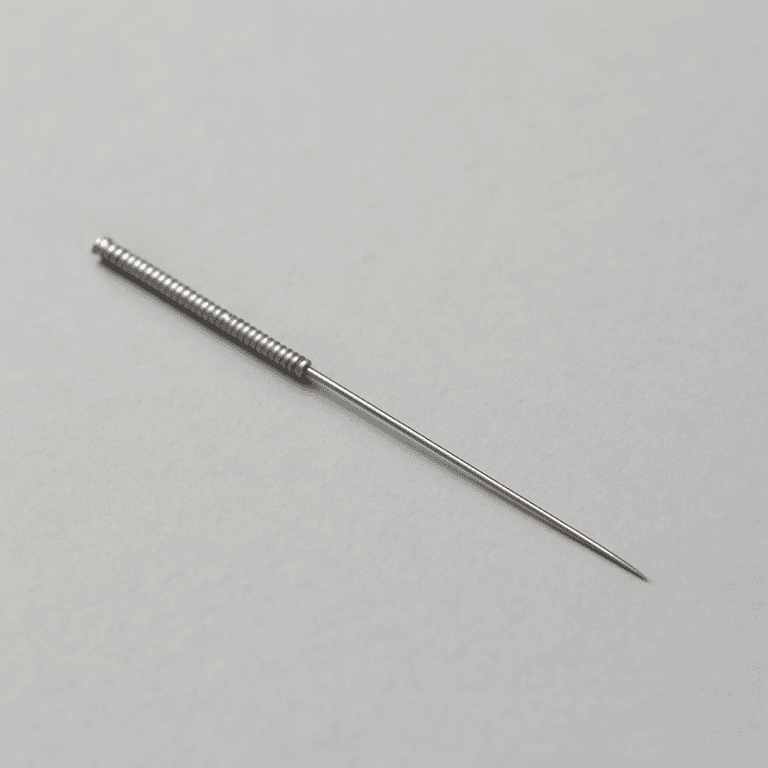
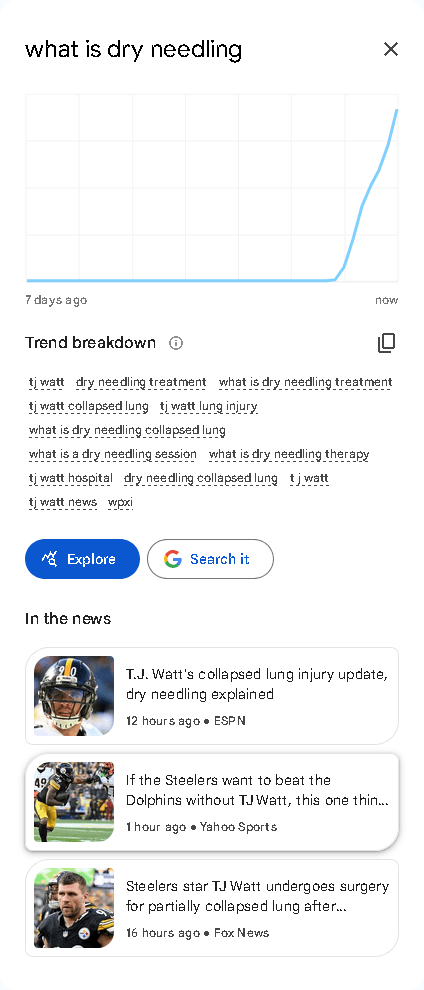
Searches for “what is dry needling,” “dry needling treatment,” and “dry needling collapsed lung” have surged in recent days after NFL injury coverage referenced the technique while reporting on T.J. Watt’s condition. Here’s what’s actually confirmed, what’s still misunderstood, and why this is trending right now.
Part of the Insights Trends Explained series.
→ View the full index of social and cultural search spikes.
✅ What’s Actually Confirmed (Reality Check)
Here’s what is officially confirmed so far:
- Dry needling is a modern clinical technique used primarily by physical therapists to treat muscle pain and dysfunction by targeting myofascial trigger points.
- The procedure uses thin, solid needles and involves no medication or injection, which is why it’s called “dry.”
- Dry needling is distinct from acupuncture, despite using similar-looking needles, and is based on Western anatomy and neuromuscular science rather than traditional Chinese medicine.
Medical organizations and major health systems recognize dry needling as a legitimate therapeutic option when performed by trained professionals.
⚠️ What’s Still Unknown
- How effective dry needling is long-term for all conditions (evidence is strongest for short-term pain relief).
- Why outcomes vary significantly between patients and practitioners.
- The precise role dry needling may play in complex or high-profile injury recoveries, which are often multifactorial.
If you’re seeing posts claiming “dry needling caused a collapsed lung,” those claims are speculative and misleading without confirmed clinical context.
📈 Why This Is Trending Right Now
Several forces are driving the sudden spike in interest:
1. Primary Trigger
National sports coverage referenced dry needling while discussing T.J. Watt’s injury, introducing the term to a broad audience unfamiliar with the treatment.
2. Market or Cultural Pressure
Dry needling has become increasingly common in physical therapy and athletic recovery, but public understanding has lagged behind clinical use.
3. Algorithmic Amplification
Sports headlines, social media clips, and news aggregators amplified the unfamiliar medical term, prompting rapid “what is” searches.
This follows a familiar pattern:
Injury news → unfamiliar term → safety concerns → search spike
🧠 What This Means If You’re Affected
The Upside
- Dry needling can provide short-term pain relief for certain muscle-related conditions.
- It may improve range of motion and muscle function when used as part of a broader physical therapy plan.
- It’s widely available and commonly used in clinical practice.
In short: it’s a recognized treatment option for specific musculoskeletal issues.
The Tradeoffs
- Temporary soreness or bruising is common.
- Effectiveness varies by condition and practitioner experience.
- Rare but serious complications can occur if performed improperly, which is why training and regulation matter.
⏳ Should You Act Now — Or Wait?
You might want to wait if:
- You’re unsure whether your pain is muscle-related.
- A qualified provider isn’t available in your area.
- You’re uncomfortable with needle-based treatments.
You may not want to wait if:
- Conservative treatments haven’t worked.
- A licensed physical therapist recommends it as part of a care plan.
- You’re seeking short-term symptom relief alongside rehab.
Right now, this is best described as:
confirmed but condition-specific.
👀 What to Watch Next
If this trend continues, the next key signals will likely be:
- Clarifying medical reporting around athlete injury treatments
- State-level discussions on who is licensed to perform dry needling
- New clinical studies comparing dry needling to other PT techniques
Once those land, searches will likely shift from:
“What is it?” → “Is it safe?” → “Should I try it?”
❓ FAQ — Dry Needling
Is dry needling officially confirmed as a medical treatment?
Yes. It’s widely used in physical therapy and recognized by major medical organizations.
Is dry needling the same as acupuncture?
No. They use similar needles but are based on entirely different medical frameworks.
How risky is dry needling?
Generally low risk when performed by trained providers, with rare serious complications.
Is this just another wellness trend?
No. Dry needling has been used clinically for years; public attention is what’s new.